Rolling Stone Has a Right to Put Whoever They Want On Their Cover

RS Tsarnaev cover

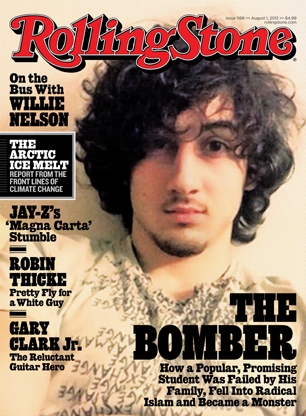
Big, stinking heap of phony outrage story of the day: Rolling Stone is printing a cover story about Boston marathon bombing suspect Dzokhar Tsarnaev and they have the nerve and lack of good taste (which is always the very first phrase we think of when we think American media, isn’t it?) to put a photo of the subject of that cover story on their cover. Shame, shame, Rolling Stone, now every body knows your name (which was probably the point to begin with, wasn’t it?).

Obvious point millions of “concerned” media members and other nervous nellies are blithely missing while falling all over themselves to feel outrage on behalf of poor, weak, innocent, defenseless, little Boston (Shame on you, Dropkick Murphys!): Rolling Stone has the same right to put on their cover whoever or whatever they want to put on their cover as all of those magazines that chose to give Osama bin Laden his celebrity treatment in the aftermath of September 11th did. What part of First Amendment right do you hypocrites not understand?

(Hey, Boston Herald, why don’t you show Rolling Stone the way and just say no to using the Tsarnaevs’ mugs to sell your cheap rag, huh?)

Grow up, America. The world is a hard place. The news media have a right (and responsibility) to make that unpleasant fact known to us.m

No use spending any more time on this ridiculous waste of a non-story. But if you want to defend the “defenders of decency” and attack Rolling Stone‘s “poor taste” and “bad judgment” in the comments, I will be more than happy to kick your ass down there.

Poof of Heaven: Eben Alexander’s Truth Problem

bouguereau-a-soul-brought-to-heaven

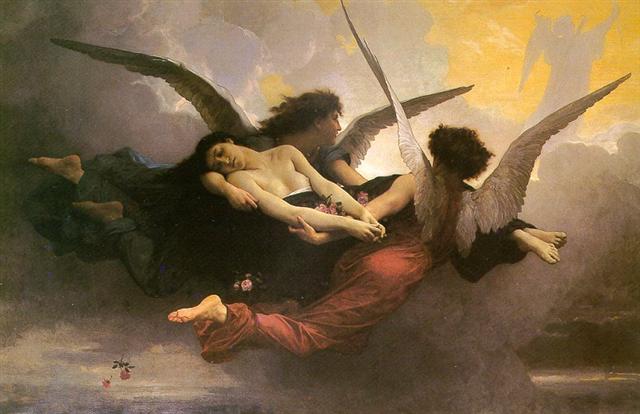
Esquire magazine has a long article (available online for $1.99 for non-subscribers) in the August issue by Luke Dittrich investigating the claims of Eben Alexander, a so-called “Harvard neurologist” whose book Proof of Heaven purporting to describe his “near death experience” has been on the best-seller lists for almost a year.  (I wrote about the Newsweek article that preceded the book last year.) Of course Dittrich was unable to verify or falsify the central claim, that Alexander actually went to heaven while he was in a coma during a bout of bacterial meningitis. However, Dittrich did uncover a number of awkward facts about Alexander’s career as a neurosurgeon, including a history of malpractice suits (five in ten years) that eventually deprived him of his license to practice neurosurgery and which suggested to Dittrich a possible motive for Alexander to write the book besides a reportorial one.

Over at Huffington Post, Paul Raeburn has written a blog that admirably summarizes Dittrich’s article:

Dittrich comes as close as one could, without access to Alexander’s private thoughts, to showing that the book was a cynical effort to provide a new career — as a prophet! — for a neurosurgeon whose career was being consumed by malpractice suits. He was, Esquire‘s editors write in the deck, “a neurosurgeon with a troubled history and a man in need of reinvention.”

One of Dittrich’s most damning revelations (so to speak) concerns the story of one of Alexander’s own doctors who says, in contradiction of Alexander’s claim that the  e. coli bacteria that caused his meningitis also caused his coma, that she chemically induced the coma because Alexander’s involuntary movements made it impossible to operate on him. This would give the lie to Alexander’s contention that his brain had ceased all activity and that he essentially died on the gurney. It would also suggest (though Dittrich doesn’t mention the drug used to induce the coma–one major shortcoming of the Esquire piece) a likely chemical source for Alexander’s ecstatic vision.

Of course, believers will continue to believe, and as evidence of that, you need only look at the comments section on Raeburn’s blog. Continue reading

NYT Asks: Should Atheists Pray?

Joshua Reynolds - The Infant Samuel

In last week’s Room for Debate, the question the New York Times posed was this:

With atheist church services this month in Louisiana and New York, nonbelievers are borrowing some of the rituals of believers: gathering, singing, sermons.

Would it be fruitful for atheists to pray? For believers and others, what is the point of prayer?

I suppose the Times should be applauded for asking a question that seems to take atheism seriously, even if they allowed just one self-identified atheist into this “room ” to answer the question.

The simple answer, from this atheist’s perspective, is a great big fat obvious no. Prayer is by definition something asked of someone (or something), and it seems ludicrous to ask people who don’t believe in the supernatural to close their eyes, put their hands together, bow their heads and concentrate on asking something that might theoretically hear their sublingual thoughts for anything. What is the point? Leave prayer to the believers! Continue reading