Having recently read Osita Nwanevu’s crucial Common Sense for our age, The Right of the People: Democracy and the Case for a New American Founding, and more to the point, having been alive and conscious in 2026, I think there’s no better time than the present to revisit this article from 2013. There’s a poll at the end that I’d appreciate your weighing in on.
Category Archives: Journalism
Down the Xitter
I’ve been meaning to write about this for a couple of months: I am now persona non grata at X/Twitter. It’s kind of a shame, as my Twitter conversations were once a major source of inspiration for this blog. But honestly, I don’t miss being on Twitter much these days. What I used to get from it in the way of stimulating discussions with people I agreed with and (more often) didn’t agree with I now get to some degree on Bluesky. More about that in a bit.
Ever since Elon Musk was forced by a judge to make good on his empty threat to buy Twitter last year, it was clear to me that my time on that platform was marked as doomed. I had no intention of paying for a service that was deteriorating in value for me and millions of other long-time users by the day. But I believed I had as good as, if not a better chance to outlast Musk there. I underestimated his tolerance for being profoundly hated, and my own vulnerability to the consequences of that behavioral quirk.
My tenure at Twitter, which began in August 2008, ended in early September, not long after I “celebrated” my 15th Twitterversary. The beginning of the end was my tweet quoting a news story about Australian multi-millionaire Tim Gurner, who told an audience at a “Property Summit” in Sydney, “‘We need to see unemployment rise. Unemployment has to jump 40, to 50 percent in my view. We need to see the pain in the economy. We need to remind people that they work for the employer, not the other way around.”
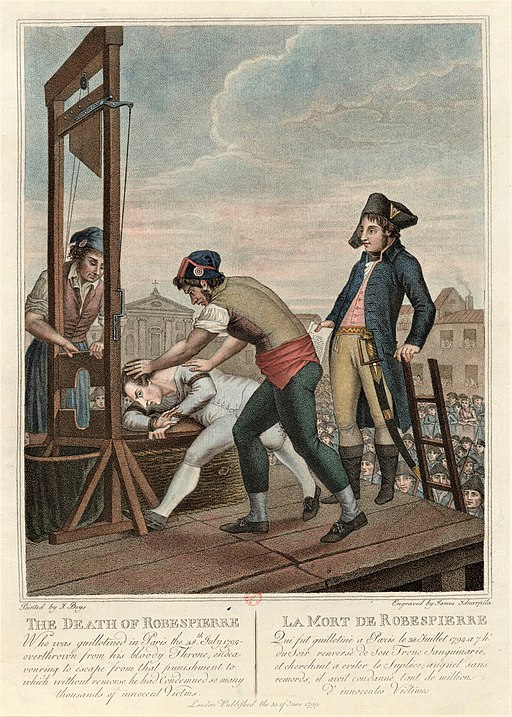
My response to this heartlessness: “How to get to the front of the line when the guillotines are ready.”
I didn’t think much about this comment, except I’d wished I’d expressed it more elegantly. In fact, because Twitter doesn’t allow non-paying members to edit their tweets (part of Musk’s crude desire to create a class society on Twitter where there formerly wasn’t one), I wasn’t able to change the awkward-sounding “when the guillotines are ready,” to something more like “come the revolution.” I didn’t think it was one of my better tweets, let’s just say.
A couple of mornings later, after a couple of days of my usual sorts of posts about animals, film and music among retweets of news stories about the UAW strike, I opened my email inbox to find a subject line telling me my X account was suspended. The form message told me a user had reported the guillotine tweet, which had violated the rule against violent speech, and they helpfully provided the rule itself: “You may not threaten, incite, glorify, or express a desire for harm or violence.”
Shades of Democratic Underground circa 2010.
I was more annoyed than shocked by this notification. I wasn’t aware that I had been threatening or inciting violence. I just thought I had made a not very good, even cliché kind of joke, given the long history of similar jokes other lefties and I have made about the fantasy of exacting revenge from the ruling class in this age of severe inequality. Was this glorifying violence? I thought of it more as using the idea of retributive violence as a rhetorical device, to express my anger over the mass violence this privileged Australian rhetorically threatened against people who, unlike him, have to sell their labor in order to shelter and feed their themselves and their families. Did my tweet actually hurt anyone? Apparently it had triggered someone on the right.
Or… I began to think, maybe Twitter was beginning to use artificial intelligence to look for language that violated its rules. Maybe “guillotine” is on the list. In the old pre-Elon days, whenever I reported someone for tweeting hate speech or harassing another person (which was not very often–maybe twice in ten years), it took much longer than a day or two for a decision to be tendered. Now my tweet was being expedited? This has the ring of automation to me.
Supporting this suspicion, when I followed the suggestion in the email to file an appeal, no sooner had I left the “courtroom” on Twitter’s site than I received another form email:
Hello,
Thank you for your patience as we reviewed your appeal request for account @ChristofPierson.
Our support team has determined that a violation did take place, and therefore we will not overturn our decision.
Your account has been suspended and will not be restored due to violations of the X Rules, specifically our rules around:
Violating our rules against violent speech.Thanks,
X
Thank me for my patience? I can do waiting five seconds in my sleep. No, there was no “review” of my appeal. None at all. In a just world, I would be able to sue X for lying about having an actual appeal process that it obviously doesn’t actually have. Fortunately for Musk, this is not a just world; I am not the only person on Bluesky who was recently defenestrated from Xitter (as the locals at Bluesky call it) for joking about punitive decapitation for enemies of working people.
If you want proof of the lack of justice in the Xitter universe, just take a look at this report on X’s influence on the Dublin riots earlier this month.
As the Associated Press reported in October, experts who study disinformation have said that X has deteriorated under Musk to the point that it’s not merely failing to detect and remove misinformation, but is favoring posts by accounts that pay for the platform’s blue-check subscription service, regardless of who’s running them.
Crucially, according to Culloty, with respect to the violence in Dublin, the core group of far-right accounts suspected of inciting the violence had previously been removed from the platform for violating the company’s safety policies, but were reinstated following Musk’s takeover of the company.
“They were able to move back to X and a lot of people who had been banned were able to come back,” she said. “It’s notable that there are more people not trying to conceal their identity [in the aftermath of Musk’s takeover.] So they now feel quite comfortable making these incendiary statements.”
In the aftermath of the riots, other prominent figures from the right-wing of American politics have pushed a conspiratorial, anti-immigration narrative on X in an attempt to vindicate the violence in Ireland.
Is vindicating violence (or plotting it) different from glorifying (or joking about) it? In Musk’s universe, apparently it is, especially if the violence in question is against immigrants rather than billionaire’s.
I’m long over X, but even though I’ve found an ersatz community of Twitter refugees on Bluesky, it’s obviously not the same as what Twitter once was, which was great. Musk clearly has no feel for what made Twitter unique, and sometimes central to the multiform global conversation: it was once and for many years a free (meaning gratis) platform where anyone with internet access could join in and have a chance at equality with the “blue checks” (verified accounts of news organizations, companies and well-known persons) when that term meant something more than “paying customers.”
Bluesky is free to join, but like X, it isn’t accessible to everyone. You need to be invited to join. And until recently, you had to be a member to even look at the content. The beta version of Bluesky’sy visible-to-all version does not yet match the experience of users, who can see not only a skeet (Bluesky’s version of a tweet) but also all the responses to it. But at least it’s something. One of the best things about pre-Musk Twitter, before Musk stupidly put tight restrictions on the amount of views non-paying members and non-members are afforded, was the universal accessibility that made it possible for Twitter users’ posts to be viewed by anyone inside or out of Twitter. Now that once vital social media world is being sequestered behind paywalls, its vitality and significance to the world just a memory. One of the rare worthwhile technological pleasures of this already tired and degraded twenty-first century, down the Xitter.
The Readiness Is All: ChatGPT and the Future of Authorship

Act I, Scene I
[Enter three pigs, Jolly, Merry, and Happy]
Jolly: Oh, how fair the morn has broken,
And how sweet the dew on the grass.
We three pigs, no words unspoken,
Shall build our houses that shall last.
Merry: But hark! What threat looms o’er us?
The wolf, who seeks to do us harm.
We must build strong, lest he come nigh us,
And bring upon us his foul alarm.
Happy: Fear not, dear brothers, for I shall go,
And build my house of straw and hay.
With haste, I’ll have it done, and lo!
The wolf shall never come our way.
…
[Enter wolf, snarling and snapping]
Wolf: These pigs, they think themselves so clever,
With their straw and hay, so flimsy, light.
But I’ll show them, with my cunning, never
Shall they escape my appetite.
–ChatGPT, given the prompt to write The Three Little Pigs in the style of Shakespeare
The other day, after a discussion we were having about the danger the artificially intelligent ChatGPT tool seems to pose for unemployed writers like myself, my wife and I decided to test the robot with a series of prompts to see just how much of a threat it really is.
We weren’t just interested in having a chat with ChatGPT; we wanted to see what ChatGPT could do. What kind of literary stuff was this writing robot made of? After some simple writing exercises, we asked it to write the story of the three little pigs in the style of Shakespeare. You can see some of the result above and the whole mini-play below. Continue reading
I’m Back. And I Think Assange Should Be Freed.

I wrote my last post for this blog all the way back in May 2017, before Julian Assange was booted out of sanctuary in the Ecuadorean Embassy in London. Since then, he has been convicted of skipping bail, indicted under the US Espionage Act, and begun fighting extradition to the US from his current residence of Belmarsh Prison in the UK.
For the past nearly six years, visitors to this blog might understandably have been led to believe I am not sympathetic to Assange. My last post certainly was not.
But before I turn to other topics, let me disabuse any readers suffering the misimpression that I’m anti-Assange. I have never been in favor of Assange’s being brought to the US to face trial for his part in uncovering the atrocities of the Iraq war. I think WikiLeaks provided a great service in making the world aware of the realities behind that war, and they made several other important contributions toward shedding sunlight on the corruption behind the curtains of world power centers, as well. People need this kind of service to help us see our “leaders” for the imperfect, corruptible weaklings so many of them are.
However, one thing ought to be clear to anyone who has followed Assange’s career since 2011: He’s not so perfect a human himself, but, like the world leaders he has exposed, is all too human. His behavior around the Seth Rich bullshit is just one example of what I view as a self-dramatization fetish that has led Assange to make numerous blunders that have only made his situation worse than it had to be.
But I really don’t want to pile any more crap on the poor guy. His suffering (some of which he brought on himself) has gone on far too long. Biden should pardon him and let him go home to his family, who have also suffered for his sake beyond their fair share.
And now, on to other topics.
Did Seth Rich Leak to WikiLeaks?

Julian Assange plays coy on Dutch TV
There’s a simple answer to the question posed in the title to this post. Either he did or he didn’t. The question was raised directly to Julian Assange last summer by a Dutch TV interviewer, and it has become “relevant” (as far as relevancy goes these days) again because of a sputtering non-story that broke on Fox News this week that nevertheless lit a fire under conspiracy theorists on left and right. Continue reading
Rolling Stone Has a Right to Put Whoever They Want On Their Cover

Big, stinking heap of phony outrage story of the day: Rolling Stone is printing a cover story about Boston marathon bombing suspect Dzokhar Tsarnaev and they have the nerve and lack of good taste (which is always the very first phrase we think of when we think American media, isn’t it?) to put a photo of the subject of that cover story on their cover. Shame, shame, Rolling Stone, now every body knows your name (which was probably the point to begin with, wasn’t it?).
Obvious point millions of “concerned” media members and other nervous nellies are blithely missing while falling all over themselves to feel outrage on behalf of poor, weak, innocent, defenseless, little Boston (Shame on you, Dropkick Murphys!): Rolling Stone has the same right to put on their cover whoever or whatever they want to put on their cover as all of those magazines that chose to give Osama bin Laden his celebrity treatment in the aftermath of September 11th did. What part of First Amendment right do you hypocrites not understand?
(Hey, Boston Herald, why don’t you show Rolling Stone the way and just say no to using the Tsarnaevs’ mugs to sell your cheap rag, huh?)
Grow up, America. The world is a hard place. The news media have a right (and responsibility) to make that unpleasant fact known to us.m
No use spending any more time on this ridiculous waste of a non-story. But if you want to defend the “defenders of decency” and attack Rolling Stone‘s “poor taste” and “bad judgment” in the comments, I will be more than happy to kick your ass down there.
Related articles
- Rolling Stone puts Boston bombing suspect on cover (aeradioshow.wordpress.com)
- Would Rolling Stone Put George Zimmerman On Its Cover? (spectator.org)
- Rolling Stone Puts Dzhokhar Tsarnaev On Cover – And I Say, “So What?” (roadundiscovered.wordpress.com)
- Dzhokhar Tsarnaev on Cover of Rolling Stone! Ignites Firestorm (guardianlv.com)
“Conan O’Brien May Be About To Push the Envelope On Late Night Television”
In case you had any doubt that those are not people but programmed robots delivering you your local news:
#OWS: The Status Quo Strikes Back
I went  with my wife and daughter to Times Square on Saturday evening, October 15, to add our numbers to the #occupationWallStreet demonstration that ended up there, climaxing a day of global protest. It was invigorating to know people were there, like us, specifically for the shared purpose of declaring to the world that this is a movement–or a revolution, I like to think– only just beginning. And on top of that, to witness the tourists and ordinary denizens of the shops, hotels, restaurants and street corners near America’s Crossroads seeming to get that they were observing history being made around them, like the diners pressed against the windows on the second story of T.G.I.Friday’s staring down at the throng-choked sidewalk below. It was difficult to tell how many in the crowd were existing in the gray area between tourist just happening to be on the spot and protester in the making. (Truth be told, probably not many. But among the workers, that’s another matter.)
When we got home, my wife read aloud a report from Reuters called “Wall Street protests go global, riots in Rome,” that stunned me–actually depressed me, to be more precise. The story, by Philip Pullella from Rome with additional reporting by Ray Sanchez and Ed McAllister in New York (among others elsewhere), gave the distinct impression that, besides the Roman riots, the news service’s reporters were unimpressed with the subject. Continue reading
Fox News is Afraid of Ron Paul
As much as I criticize Dr. Libertarian from Texas, I do find Fox’s GOP-sanctioned fear of him, as pointed out by Cenk Uygur of the The Young Turks in the video below, to be utterly pathetic.
As davejoe75 says in the comments to the YouTube video: “Cenk nailed it with that last comment…O’Reilly wants the Ron Paul bump!”
Republicans on Financial Crisis Inquiry Commission Leaked Documents to Lobbyists

FCIC Chairman Phil Angelides (D) and VIce-Chairman Bill Thomas (R)
I wonder if ethics for some Republicans is so markedly different from everyone else’s such that, when charged with investigating the actions of Wall Street banks that might have led to that little catastrophe of 2008, they feel absolutely no moral qualms about sharing information about their inquiries with a lobbyist for those banks. Do they view that “heads up” to their supposed quarry as an act of heroism, even? Or do they just not have a nose for what most people would probably view as corruption in the halls of power?
After the jump, a portion of a report to Ranking Member Elijah E. Cummings of the House Committee on Oversight and Government Reform, An Examination of Attacks on the Financial Crisis Inquiry Commission. This document concerns several charges against Republicans on this Commission, which was established in 2009 to investigate the causes of the financial crisis. Some of the charges concern the Republican Commissioners’ partisanship while on the panel, i.e., using their position to try to aid House Republicans’ efforts to kill the Dodd-Frank Act, or “parroting” an American Enterprise Institute “theory” about the role Freddie Mac and Fannie Mae played in causing the crisis, which became a major right-wing talking point in Congress and the media. But perhaps the most damning charges concern Vice-Chairman Bill Thomas, who the report alleges, shared information about the ongoing investigation with a friend and colleague who happened to be chief lobbyist for Citibank among other financial players: Continue reading