Kant and Capital Punishment (Take 2)

In a previous post, I responded to commenter Dudley Sharp‘s citation of a quote purporting to be from Immanuel Kant in support of the death penalty:

“If an offender has committed murder, he must die. In this case, no possible substitute can satisfy justice. For there is no parallel between death and even the most miserable life, so that there is no equality of crime and retribution unless the perpetrator is judicially put to death….A society that is not willing to demand a life of somebody who has taken somebody else’s life is simply immoral.”

Not being a philosopher but having read and thought a bit about Kant on my own, I doubted the provenance of the quote. In fact, it turns out it is from Kant’s Metaphysics of Morals. Kant did indeed believe in and argue for the morality of capital punishment.

This in itself, of course, does not solve the matter. Just because Kant thought the death penalty was moral doesn’t mean it is, in fact, so.  But I want to take the argument seriously and consider it in terms of Kant’s ethics as a whole as I understand them. Again, I’m not trained as a philosopher, as is probably apparent to anyone who wondered why I doubted the original quote was from Kant. But bear with me. This is an important and useful line of thought with respect to justice generally. And by all means, if you think my reasoning is wrong, please explain why in the comments section of this post. Continue reading

Mystic or Manic?: Religion on the Brain (or Your Brain on Religion)?

Last night I was having a twittersation with someone named Simon Albert, a nonconforming, conservative Ron Paul supporter who refuses to go along with the Romney Republicans, about something entirely unrelated (at least in obvious ways) to politics: the nature of cosmic reality and what human minds can know about it. It’s not easy to have conversations of such weight in so ephemeral a format, but, of course, that rarely stops “tweeple” from trying.

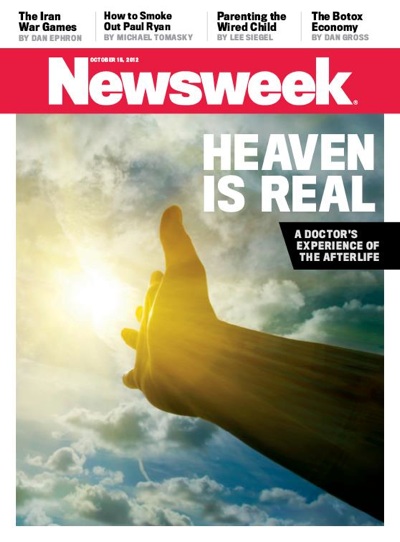
It began when Albert tweeted, “God is real. #jesus #atheism.” Clearly, Albert was trolling for an argument with an atheist and he put a great big juicy worm on his hook. I bit. Continue reading

Tax Increases or Books: A Library Fights Back

This video tells the tale of how Troy, Michigan’s public library cleverly and successfully fought back (with the help of an ad agency) against a Tea Party effort to shut it down in lieu of authorizing a 0.7% tax increase to keep it open. This story is probably a common one in the age of austerity. Although the election was almost two months ago, this is the first I heard of the campaign.

I’d like to believe that the Tea Partiers are sincere in their chagrin over the sense that they’ve lost control of their government. We on the left certainly can understand that. But they repeatedly show poor value judgment, as in this instance in Michigan. They can often seem to embody Oscar Wilde’s quip about a cynic knowing the price of everything and the value of nothing. But they’re witless cynics if they don’t know that 0.7% added to a yearly tax bill is a very small price to pay for a library.

“Gog and Magog are at work in the Middle East,” Bush told Chirac.

Whenever I read an account of the lead-up to the Iraq war, I usually marvel over how much the critics of the war got right. We guessed Saddam was not lying about weapons of mass destruction. We knew from the beginning the Bushists were going to have the war no matter what anyone else said. We knew they had been planning it all along. We knew they were not going to topple Saddam and *poof* like magic a wonderful new Iraq would appear. We knew they had let the sectarian monster out of the labyrinth. We knew they didn’t give a shit about the members of the military they were using and reusing and reusing again and again to fight their war. We knew!

Now I find out, the truth was probably even weirder than we suspected.

Vanity Fair has a six-page excerpt from Kurt Eichenwald’s 500 Days: Secrets and Lies in the Terror Wars up on its site and its an eye-opening read. Most of it confirms what critics suspected. I always did know Bush was an embarrassment, but if the following scene Eichenwald describes actually took place… well, there just are no words!  This is alleged to have occurred in a phone call between the two world leaders as Bush was trolling for support for his Iraq policy from UN Security member nations, at the insistence of Tony Blair, in the late fall of 2003:

But before Chirac could elaborate on that point, Bush veered into another direction.

“Jacques,” he said, “You and I share a common faith. You’re Roman Catholic, I’m Methodist, but we are both Christians committed to the teachings of the Bible. We share one common Lord”

Chirac said nothing. He didn’t know where Bush was going with this.

“Gog and Magog are at work in the Middle East,” Bush said. ‘’Biblical prophecies are being fulfilled.”

Gog and Magog? What was that?, thought Chirac.

“This confrontation,” Bush said, “is willed by God, who wants to use this conflict to erase his people’s enemies before a new age begins.”

Chirac was bewildered. The American president, he thought, sounded dangerously fanatical.

After the call ended, Chirac called together his senior staff members and relayed the conversation.

“He said, ‘Gog and Magog.’ Do any of you know what he is talking about?”

Blank faces and head shakes.

“Find out,” Chirac said.

On Moral Arguments for the Death Penalty: “Kant” and Retribution

Immanuel Kant: “If an offender has committed murder, he must die. In this case, no possible substitute can satisfy justice. For there is no parallel between death and even the most miserable life, so that there is no equality of crime and retribution unless the perpetrator is judicially put to death.”.

“A society that is not willing to demand a life of somebody who has taken somebody else’s life is simply immoral.”

Cited by Dudley Sharp in comments on a previous post

Continuing a conversation begun here and taken up by commenter Dudley Sharp (for whose contribution I’m grateful), I want to turn to Sharp’s “MORAL FOUNDATIONS OF THE DEATH PENALTY, Part I) (See the comment linked to above–and I hope Sharp will share Part II or more). I probably won’t spend much time addressing the religious arguments–or I may come back to them later. I will just say that I don’t believe any human is capable of speaking for the alleged ultimate authority on morality, which many name “God.” I think it’s more fruitful to assume that justice on earth is more of a political or social problem than a cosmic one. So let me focus on Sharp’s “foundations” that jibe with that view, such as the argument from “Kant” above for starters. Continue reading

Why We Need a New Approach to Justice

I’ve been absent from this blog for a while, feeling frankly too hopeless about the political situation to pick up on my usual themes and too busy reading for pay as a professional reviewer to have much time to explore other ideas. But I have been thinking about something that I’d like to begin exploring on this blog, just setting aside the question of whether it can ever become a more generally salient idea for discussion elsewhere, let alone a movement for radical change. In a word: I’d like to propose a radical rethinking of justice, crime and punishment.

Continue reading

Was Miami’s “Zombie” Attack a Case of Rabies?

Image

You’ve probably heard by now about the case of the naked man “eating” the face of a victim on a busy Causeway in downtown Miami. If not, here (if you aren’t too squeamish) is the story. Continue reading

“The Shock Doctrine” in Easily Chewable Form

The Shock Doctrine – Naomi Klein from Vj Ultra on Vimeo.

Naomi Klein’s The Shock Doctrine is one of the most important books of the young 21st century and will likely remain so as it ages. I’ve mentioned it before and will probably have call to mention it again and again. As a public service, I’m making this film version available here for anyone who doesn’t have the time/patience/whatever to read the book. I hope it will convince you to make a plan to read the whole work.]

What We Talk About When We Talk About Jesus

Does it feel good to think of this face as Jesus’s?

Bart D. Ehrman is a fairly liberal theologian, an ex-fundamentalist who calls himself agnostic, who hasn’t been afraid to ruffle some feathers among his fellow scholars of Christian texts, especially among those who used to think of him as of the same flock. For more on his background, read his wikipedia entry. I want to get to his newest book’s argument, which he summarizes on Huffington Post, and which seems designed to ruffle feathers of another of his former flocks, or a “small but growing cadre” of it,  “who call themselves mythicists,” he says.  Continue reading

Graeber: Why Austerity Reflects a Sham Morality

In an interview with David Johnson of Boston Review, anarchist/activist/anthropologist and author of Debt: The First 5,000 Years David Graeber makes a key point about the “morality” behind austerity movements that is destined to be missed by all influential economists, bankers, presidential candidates and media pundits, but which no one interested in ethics , politics, or economics should miss (my emphasis):

David Johnson: What inspired you to write the book?

David Graeber: It came out of the strange moral power that debt has over people. So many times you’re talking to people about the depredations of the International Monetary Fund in the third world, telling these horrible stories about the thousands of babies dying of preventable diseases because people aren’t allowed to maintain malaria-eradication campaigns or basic health services due to austerity measures and debt servicing, and people respond, “Well, yeah, but you can’t say they don’t owe the money. People have got to pay their debts, come on!” That common-sensical notion not only that it’s moral to pay one’s debt, but also that morality essentially is a matter of paying one’s debts can bring people to justify things that they would never think to justify in any other circumstance. For the most part, decent people tend not to think killing lots of babies is justifiable under any circumstances. But debt somehow changes all that. Why is that?

Let’s try to really pay attention to that question, because as citizens of the modern democratic-capitalist world, we are very well-educated to gloss over it. Continue reading