Bad Faith Crashes into “Noncompatible Leftism”

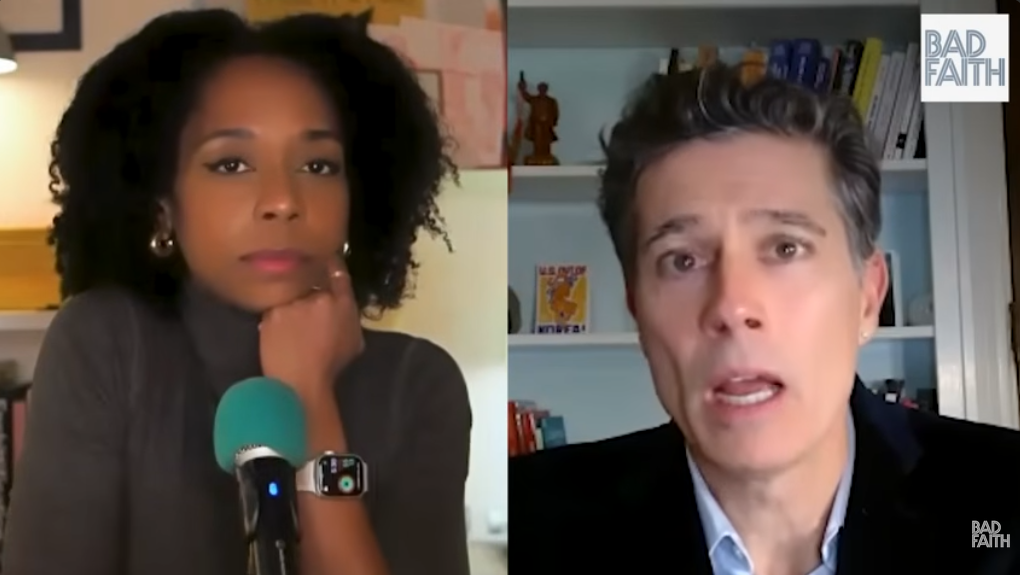
Briahna Joy Gray, former spokesperson for the  Bernie Sanders primary campaign of 2020 and host of the popular podcast Bad Faith, did her listeners a real service recently by having on as a guest Villanova professor of philosophy Gabriel Rockhill to talk about his new book Who Paid the Pipers of Western Marxism? and how the CIA constructed what Rockhill calls “compatible leftism.”

According to Rockhill, an unabashed revolutionary Marxist, during the Cold War the CIA groomed anti-Soviet, self-identified “Marxists” from the Frankfurt School (including Max Horkheimer, Theodore Adorno, and Herbert Marcuse), funding their scholarship and bringing some of them to the US to teach at elite American universities. The point was to influence a movement in Western European and North American Marxism that would shift its focus from class conflict to culture and turn it into a theory and criticism factory, thereby draining it of its anti-capitalist power and removing it as a threat to the capitalist imperialist political order that created the CIA for exactly such purposes. Rockhill classifies these scholars and more recent ones like Michel Foucault and Slavoj Zizek into the “compatible” left because it has no interest in altering the power structure. Rather, it fits comfortably into it. (Horkheimer, considered one of the founders of the Frankfurt School, for example, would eventually shock lefties by defending the Vietnam War as a bulwark against Red China!)

The Democratic Party, meanwhile, has never been part of the left. It has always been a party of capital. Any “left” impulse the party has ever had (and probably will ever have) has come only from popular movements outside its infrastructure, which mirrors the national political structure: money on top, people below.

Gray does a superb job of supporting Rockhill as he explains these foundational facts of capitalist empire to her listening audience, sharpening the focus with illustrations from her own experience as a Harvard-trained lawyer and political player/influencer of the left. Rockhill’s book seems clearly to have resonated with her, even excited a sense of hope in her.

But then, nearly a third of the way through the three-hour podcast, Gray reveals a knee-jerk tendency in her approach to conversation that can sometimes undermine the intended irony of her show’s title.

Continue reading

NY21, This Is an Emergency!

A farmer, not a politician.

A couple of nights ago, I attended a Zoom meet-and-greet with Blake Gendebien, the Democratic candidate to replace Trump toady Elise Stefanik in New York Congressional District 21 when she vacates it to be vetted by the Senate for her appointment as UN Ambassador. As you might expect, the voters in the mostly rural, 86% white NY21 in the far northeastern part of the state, are as far politically from the voters in New York City, where I live, as New York City is geographically from NY21. The district voted solidly for Trump in all three of his presidential campaigns.

The GOP believes it now owns the district, though Stefanik, who was first elected in 2014, was the first Republican to represent it since Hamilton Fish IV was redistricted out in 1992. A long-term holder of the seat before he, too, was redistricted out was the “staunch progressive” Paul Tonko, who now represents NY20.

To get an idea of how radically NYS and US politics have changed in recent times, before migrating north up the Hudson River, NY21 represented New York County, otherwise known as Manhattan. Back then (in the 1960s and 1970s), it was represented by actual liberal Republican (and Liberal Party member) Jacob Javits, who early in his Congressional career, as an example of his political inclinations, opposed Taft-Hartley because it threatened the strength of labor unions.

Who is Blake Gendebien?

Blake Gendebien (pronounced JEN-da-bean) is what is now known as a “moderate” Democrat. (Republican operatives call him “far left.” More about that in a moment.) He’s a dairy farmer and small businessman who with his wife Carmen, a Cuban immigrant he met while studying agriculture and business at Penn State, owns 500 cows and 1,500 acres near the St Laurence River. Like Kamala Harris’s running mate Tim Walz, Gendebien is a dad and a former coach. He says he wants to “strengthen the border” and get rid of regulations that hamper small businesses like his own.  He owns a gun, says he supports the Second Amendment and subscribes to Gun Sense Voter principals. It seems, so far, that only the Gun Sense part could possibly be controversial in his district.

Continue reading

Republicans in Congress Are Fine with Musk Power Grab

First phone lines in Kathmandu being laid in 1959 with help from the United States Agency for International Development (USAID). This photo is from an archived USAID site. At the time of this posting, the USAID site itself was dark.

There are some extraordinary admissions from powerful Congressional Republicans in a NOTUS article by Haley Byrd Wilt, Shifra Dayak and Ben T.N. Mause :

In interviews on Monday night, Republican senators — including members of the Appropriations Committee tasked with setting funding levels — dismissed Musk’s moves to consolidate his power and seize sensitive government systems to shut down spending. They say that Musk, in rejecting appropriations laws passed by Congress, is simply following Trump’s priorities.

Some, like North Carolina Sen. Thom Tillis, even acknowledged that what Musk is doing is unconstitutional — but “nobody should bellyache about that.”

“That runs afoul of the Constitution in the strictest sense,” Tillis said. But “it’s not uncommon for presidents to flex a little bit on where they can spend and where they can stop spending.”

Other Republicans argued that Musk is making the government more efficient, and they said they’re glad — if nobody on Capitol Hill is going to slash spending — that someone has finally taken charge.

“The actions that have been taken with USAID are long overdue,” Sen. Bill Hagerty said. “The agency is out of control.”

And Sen. John Hoeven said “they need to be accountable.”

Yes, a Republican says, a US agency that has been at the center of foreign aid (and secret foreign policy) for more than half a century needs to be held accountable, but the party’s choice for effecting that? The world’s wealthiest man and his team of barely legal social media minions, none of whom has been vetted by Congress or any other Constitutionally empowered entity.

Or do they want to make the case that the Constitutionally-elected and seated president picked him to wield extraordinary powers over the government, so it’s virtually Constitutional somehow? No, they don’t say that. They admit it runs “afoul” of the Constitution–but who cares?

Adios, “strict constitutionalism.” Hello, interesting times.

Down the Xitter

Jokes about decapitation may be lethal to your X/Twitter health.


I’ve been meaning to write about this for a couple of months: I am now persona non grata at X/Twitter. It’s kind of a shame, as my Twitter conversations were once a major source of inspiration for this blog. But honestly, I don’t miss being on Twitter much these days. What I used to get from it in the way of stimulating discussions with people I agreed with (and more often didn’t agree with) I now get to some degree on Bluesky. More about that in a bit.

Ever since Elon Musk was forced by a judge to make good on his empty threat to buy Twitter last year, it was clear to me that my time on that platform was marked as doomed. I had no intention of paying for a service that was deteriorating in value for me and millions of other long-time users by the day. But I believed I had as good as, if not a better chance to outlast Musk there. I underestimated his tolerance for being profoundly hated, and my own vulnerability to the consequences of that behavioral quirk.

My tenure at Twitter, which began in August 2008, ended in early September, not long after I “celebrated” my 15th Twitterversary. The beginning of the end was my tweet quoting a news story about Australian multi-millionaire Tim Gurner, who told an audience at a “Property Summit” in Sydney, “‘We need to see unemployment rise. Unemployment has to jump 40, to 50 percent in my view. We need to see the pain in the economy. We need to remind people that they work for the employer, not the other way around.”

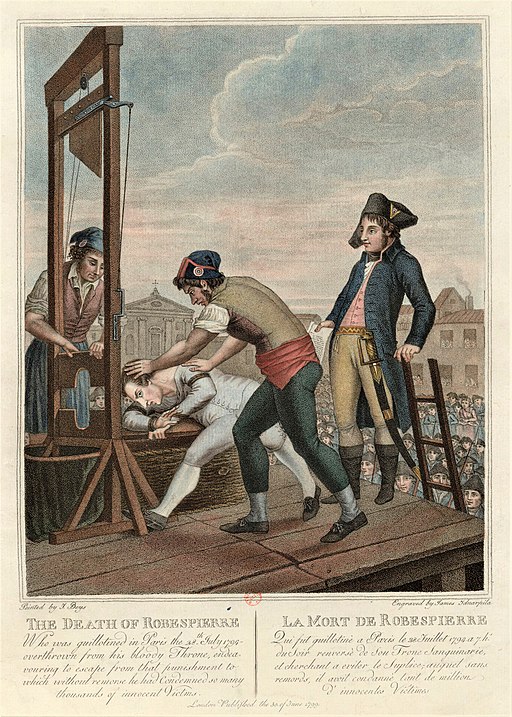
My response to this heartlessness: “How to get to the front of the line when the guillotines are ready.”

Continue reading

The Readiness Is All: ChatGPT and the Future of Authorship

Act I, Scene I

[Enter three pigs, Jolly, Merry, and Happy]

Jolly: Oh, how fair the morn has broken,
And how sweet the dew on the grass.
We three pigs, no words unspoken,
Shall build our houses that shall last.

Merry: But hark! What threat looms o’er us?
The wolf, who seeks to do us harm.
We must build strong, lest he come nigh us,
And bring upon us his foul alarm.

Happy: Fear not, dear brothers, for I shall go,
And build my house of straw and hay.
With haste, I’ll have it done, and lo!
The wolf shall never come our way.

[Enter wolf, snarling and snapping]

Wolf: These pigs, they think themselves so clever,
With their straw and hay, so flimsy, light. 
But I’ll show them, with my cunning, never
Shall they escape my appetite.

–ChatGPT, given the prompt to write The Three Little Pigs in the style of Shakespeare

The other day, after a discussion we were having about the danger the artificially intelligent ChatGPT tool seems to pose for unemployed writers like myself, my wife and I decided to test the robot with a series of prompts to see just how much of a threat it really is.

We weren’t just interested in having a chat with ChatGPT; we wanted to see what ChatGPT could do. What kind of literary stuff was this writing robot made of? After some simple writing exercises, we asked it to write the story of the three little pigs in the style of Shakespeare. You can see some of the result above and the whole mini-play below. Continue reading

#FreeWillies

free-will-99-steps-of-progress-geek-art-series

Last week, in the wake of the People’s Climate March and the #FloodWallStreet protests that followed it, I was tweebating folks of the “voluntarist” persuasion of libertarianism about the alleged hypocrisy (or irony, at least) of environmentalists using the fruits of capitalism to communicate their presumably anti-capitalist ideas. This was something we used to hear a lot in the beginning of the #Occupy movement from Wall Street’s apologist-propagandists in the media and the grandstands they played to. The argument seemed to be, if you use it, you can’t complain about it. Interesting to me, those who take this argument seriously (and assuming anyone really does, it must be these people), they don’t seem able to see that they could be accused of a similar hypocrisy for criticizing the government when they benefit from government infrastructure, public safety and defense.

But that is not my problem with the voluntarists. My problem is with their fundamental stance, which was exemplified for me in a tweet from one “Jack”:

Jack ‏@oaaselect Sep 23

Did you get tricked into buying your device [meaning what I was using to Tweet with] or did you buy it voluntarily? @ChristofPierson @scooterpie61

via Twitter / Notifications.

On its face, this seems like a good question. The problem is, if you dig just a little under the face, the question falls apart. Do we really buy things “voluntarily”–of our own free will? Is it as simple as that? Consider the millions of people who broke records dumping their current phones for the iPhone 6 recently. Did all of those people need a new phone? Did they need the iPhone 6 in particular? Considering they were surviving fine without it until it went on sale, It’s hard to believe they did.. But the question is not did they need it, but did they want it? Did they buy it of their own free will?

Philosophically, free will is still controversial, of course. It’s a popular belief for obvious reasons, but the jury is still out on whether or not it’s fact. The very unpopular determinist position is that we are restricted to a very limited range of behaviors, based on any given stimulus, and the range shrinks the more habituated to these stimuli we become–unless we are insane, in which case, our behaviors can be frighteningly free-ranging and considered dangerous to society. Of course, just because this is an unpopular (because unflattering) point of view doesn’t mean it’s wrong.

I think it’s prudent to wonder, then, if the millions who ran out to buy the iPhone 6 all really “wanted” the phone or were responding as expected to a stimulus (“new Apple product,” or just,” latest gadget”) they’ve become habituated to reacting to in a specific way. There is no easy way of knowing, except maybe by comparing one’s own responses to these kinds of stimuli. Do we always buy what we want? Do we always take the job, or marry the spouse, or buy the house or car or gadget we want?  If I were a voluntarist–I mean, if voluntarism were something I thought I wanted to believe in–wouldn’t it be important to know if free will were something more than a wish or hope–in other words, a self-flattering illusion? Wouldn’t it be important to know if it were something more like an objective fact?

If it is more like fact, it certainly is not a simple one. But my conversation with these voluntarists was unsatisfying not just because of Twitter’s limitations as a forum for complex discussion. These voluntarists were not interested in complexities in the least. They were quite content with their received opinions about free will, the nature of “real capitalism’ (which according to them is something, unironically to them,  not of this world), or the right (or justice, if you will) of those who critique capitalism partaking in the gadgets the system produces. I have to wonder, who’s less liberated: the person within a system who sees its faults and says what those faults are, or the person whose ideology doesn’t permit more than a shallow understanding of the very thing they think they believe in.

Was it John Boehner’s Intent to Sabotage the #Teaparty?

John Boehner

John Boehner (Photo credit: Keith Allison)

There’s a fascinating, very sour interview on Salon.com with Adam Brandon, a leader of Freedom Works. That organization, somewhat defanged in the wake of an acrimonious split with its former leader, the former Texas Congressman Dick Armey, was nevertheless instrumental in forging right-wing discontent with Obamacare into pockets of astroturf activism around the country. More recently Freedom Works played a role in goading Republicans into following the Tea Party line over the shutdown and debt ceiling debacles. Brandon has ideas about the shutdown and House Speaker John Boehner’s motives during it that are worth considering,

I’m not sure if he’s going to be running for Speaker again. I wonder if that’s part of all of this as well. Why did – I mean the way it was crafted…You needed Democrats to pass this. And what I don’t understand is, if the plan all along was to put just basically a pretty clean CR out there and pass it with Democratic support, Democratic members, why even do it? Why not do this a month ago? Or were they actually trying to embarrass some people, or trying to cause this fight? I mean who knows. I don’t know why these things – if this was the plan all along, he should have started this at the very beginning, and just, “Hey, listen, we’re just going to pass this with Democratic votes.”

All along, observers were wondering what Boehner was up to. He looked weak, terrified of a small group of rabid right-wingers who were insisting on an all-or-nothing fight against Obamacare, which Boehner, being an old hand in DC, had to have known was a big fat turkey that was never going to fly. He would not be Speaker without the rabid right, but he would never be able to accomplish anything worthy of a legacy with them. The Tea Party coalition is the entire reason the Republicans have become the Party of No: No major legislation, no enabling of Obama, no compromise ever. Not much ammo there to stake a Speakership on.

Brandon’s paranoid theory actually makes a kind of sense, then. What if Boehner, realizing his legacy was doomed because of this awful hand he was dealt, decided, having nothing personally to lose, to take revenge on his tormentors on the right by giving them enough rope to hang  themselves? What if he was thinking, if they’re going to tear me down, I’m taking them down with me?

Perhaps this is giving Boehner too much credit. But even if this were his intention, and even if it shows him to be more of a master Machiavellian than most had assumed, it doesn’t change the fact that the shutdown caused massive pain, to government employees, to families, to women with infants and children, to cancer patients, to people with disabilities, veterans, to local and national economies. He can’t be forgiven for that. But it would at least make his actions comprehensible. At least we would know, that cruel and heartless though he may be, he wasn’t motivated by sheer insanity.

Copyright Keeps Books Out of Print

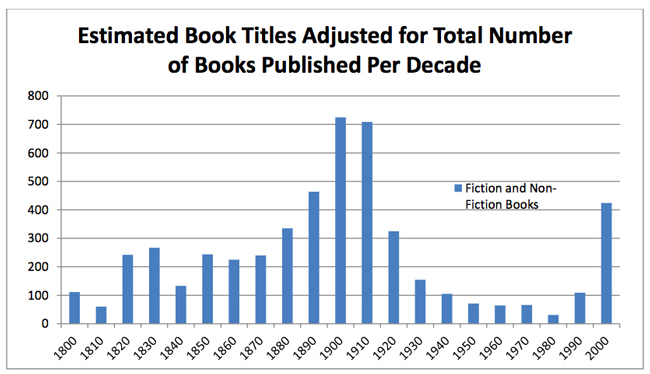
adjustedtitles650

Copyright advocates have long (and successfully) argued that keeping books copyrighted assures that owners can make a profit off their intellectual property, and that that profit incentive will “assure [the books’] availability and adequate distribution.” The evidence, it appears, says otherwise.

Rebecca J. Rosen outlines that evidence in an article at the Atlantic, “The Hole in Our Collective Memory: How Copyright Made Mid-Century Books Vanish.”  It’s always worth asking ourselves just what use present copyright law is for anyone but the massive copyright hoarders like publishers and entertainment retailers. It certainly doesn’t benefit the public and now it’s even clear that it doesn’t even benefit the author whose “intellectual property’ it’s alleged to protect and promote.

Copyright law does, in any case, provide a good lesson in American civics. It demonstrates loudly and clearly whose interests our government has nearest and dearest to its heart.  It’s not the people, of course, but always the intellectual property barons. We can rely on our faithful public servants in government, when given a choice between liberalizing the law (which would have the effect of enriching the creative atmosphere for all) and making it more and more constipated, to always choose the path of most constipation. Call it the trickle out theory of American culture.

Noam Chomsky: “It’s institutional structures that block change.”

Keystone XL demonstration, White House,8-23-20...

Keystone XL demonstration, White House,8-23-2011 Photo Credit: Josh Lopez (Photo credit: Wikipedia)

If yesterday’s post of Lawrence Lessig‘s TED talk on corruption gives you reason for optimism, you may want to check that after you read this from perennial thorn in the side of the powers that be Noam Chomsky, who writes of a peculiar distinction between the most “advanced” societies in the world today and those  least touched by technological “progress” as far as the threat of climate change goes:

So, at one extreme you have indigenous, tribal societies trying to stem the race to disaster.  At the other extreme, the richest, most powerful societies in world history, like the United States and Canada, are racing full-speed ahead to destroy the environment as quickly as possible.  Unlike Ecuador, and indigenous societies throughout the world, they want to extract every drop of hydrocarbons from the ground with all possible speed.

Both political parties, President Obama, the media, and the international press seem to be looking forward with great enthusiasm to what they call “a century of energy independence” for the United States.  Energy independence is an almost meaningless concept, but put that aside.  What they mean is: we’ll have a century in which to maximize the use of fossil fuels and contribute to destroying the world.

And that’s pretty much the case everywhere.  Admittedly, when it comes to alternative energy development, Europe is doing something.  Meanwhile, the United States, the richest and most powerful country in world history, is the only nation among perhaps 100 relevant ones that doesn’t have a national policy for restricting the use of fossil fuels, that doesn’t even have renewable energy targets.  It’s not because the population doesn’t want it.  Americans are pretty close to the international norm in their concern about global warming.  It’s institutional structures that block change.  Business interests don’t want it and they’re overwhelmingly powerful in determining policy, so you get a big gap between opinion and policy on lots of issues, including this one.

This seems to be a pretty important point, but it’s very difficult to know how seriously it’s being taken: The United States government does not have the species’ or the world’s best interests at heart. And it’s not just the Republicans, who are an easy target for American liberals,  that we have to blame. The fact is the Republicans are pretty much brain-dead and useless at this point. But are the Democrats really all that much better on this issue in particular? Continue reading

Ron Paul’s Principle of Personal Responsibility: A Critique

Single_Payer_Public_Opinion.Svg

5. Individuals are responsible for their own actions; government cannot and should not protect us from ourselves.

–from The Ten Principles of a Free Society

Part of the reason I began critiquing Ron Paul’s Ten Principles of a Free Society a couple of years ago was my curiosity about whether they really were essential to any free society or just Ron Paul’s vision of one. I think I can use the fifth principle to show why they are all uniquely Paulian/Libertarian and not, in fact, essential to all notions of a free society. To do that, I just need to show you an example of a free society where government or an authority can and should protect us “from ourselves.” Continue reading