NY21, This Is an Emergency!

A farmer, not a politician.

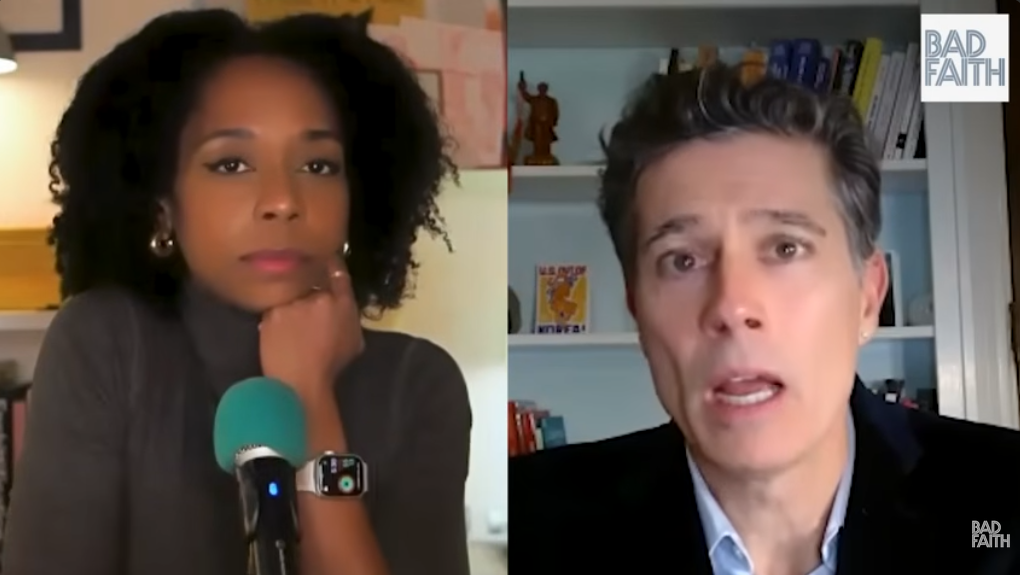
A couple of nights ago, I attended a Zoom meet-and-greet with Blake Gendebien, the Democratic candidate to replace Trump toady Elise Stefanik in New York Congressional District 21 when she vacates it to be vetted by the Senate for her appointment as UN Ambassador. As you might expect, the voters in the mostly rural, 86% white NY21 in the far northeastern part of the state, are as far politically from the voters in New York City, where I live, as New York City is geographically from NY21. The district voted solidly for Trump in all three of his presidential campaigns.

The GOP believes it now owns the district, though Stefanik, who was first elected in 2014, was the first Republican to represent it since Hamilton Fish IV was redistricted out in 1992. A long-term holder of the seat before he, too, was redistricted out was the “staunch progressive” Paul Tonko, who now represents NY20.

To get an idea of how radically NYS and US politics have changed in recent times, before migrating north up the Hudson River, NY21 represented New York County, otherwise known as Manhattan. Back then (in the 1960s and 1970s), it was represented by actual liberal Republican (and Liberal Party member) Jacob Javits, who early in his Congressional career, as an example of his political inclinations, opposed Taft-Hartley because it threatened the strength of labor unions.

Who is Blake Gendebien?

Blake Gendebien (pronounced JEN-da-bean) is what is now known as a “moderate” Democrat. (Republican operatives call him “far left.” More about that in a moment.) He’s a dairy farmer and small businessman who with his wife Carmen, a Cuban immigrant he met while studying agriculture and business at Penn State, owns 500 cows and 1,500 acres near the St Laurence River. Like Kamala Harris’s running mate Tim Walz, Gendebien is a dad and a former coach. He says he wants to “strengthen the border” and get rid of regulations that hamper small businesses like his own.  He owns a gun, says he supports the Second Amendment and subscribes to Gun Sense Voter principals. It seems, so far, that only the Gun Sense part could possibly be controversial in his district.

Continue reading

Republicans in Congress Are Fine with Musk Power Grab

First phone lines in Kathmandu being laid in 1959 with help from the United States Agency for International Development (USAID). This photo is from an archived USAID site. At the time of this posting, the USAID site itself was dark.

There are some extraordinary admissions from powerful Congressional Republicans in a NOTUS article by Haley Byrd Wilt, Shifra Dayak and Ben T.N. Mause :

In interviews on Monday night, Republican senators — including members of the Appropriations Committee tasked with setting funding levels — dismissed Musk’s moves to consolidate his power and seize sensitive government systems to shut down spending. They say that Musk, in rejecting appropriations laws passed by Congress, is simply following Trump’s priorities.

Some, like North Carolina Sen. Thom Tillis, even acknowledged that what Musk is doing is unconstitutional — but “nobody should bellyache about that.”

“That runs afoul of the Constitution in the strictest sense,” Tillis said. But “it’s not uncommon for presidents to flex a little bit on where they can spend and where they can stop spending.”

Other Republicans argued that Musk is making the government more efficient, and they said they’re glad — if nobody on Capitol Hill is going to slash spending — that someone has finally taken charge.

“The actions that have been taken with USAID are long overdue,” Sen. Bill Hagerty said. “The agency is out of control.”

And Sen. John Hoeven said “they need to be accountable.”

Yes, a Republican says, a US agency that has been at the center of foreign aid (and secret foreign policy) for more than half a century needs to be held accountable, but the party’s choice for effecting that? The world’s wealthiest man and his team of barely legal social media minions, none of whom has been vetted by Congress or any other Constitutionally empowered entity.

Or do they want to make the case that the Constitutionally-elected and seated president picked him to wield extraordinary powers over the government, so it’s virtually Constitutional somehow? No, they don’t say that. They admit it runs “afoul” of the Constitution–but who cares?

Adios, “strict constitutionalism.” Hello, interesting times.

Statement from the family of Ayşenur Eygi – International Solidarity Movement

Today our family and our community are in shock and grief, as we wrestle with the reality that our beloved Ayşenur Ezgi Eygi is gone. Like the olive tree she…
— Read on palsolidarity.org/2024/09/statement-from-the-family-of-aysenur-eygi/

Down the Xitter

Jokes about decapitation may be lethal to your X/Twitter health.


I’ve been meaning to write about this for a couple of months: I am now persona non grata at X/Twitter. It’s kind of a shame, as my Twitter conversations were once a major source of inspiration for this blog. But honestly, I don’t miss being on Twitter much these days. What I used to get from it in the way of stimulating discussions with people I agreed with (and more often didn’t agree with) I now get to some degree on Bluesky. More about that in a bit.

Ever since Elon Musk was forced by a judge to make good on his empty threat to buy Twitter last year, it was clear to me that my time on that platform was marked as doomed. I had no intention of paying for a service that was deteriorating in value for me and millions of other long-time users by the day. But I believed I had as good as, if not a better chance to outlast Musk there. I underestimated his tolerance for being profoundly hated, and my own vulnerability to the consequences of that behavioral quirk.

My tenure at Twitter, which began in August 2008, ended in early September, not long after I “celebrated” my 15th Twitterversary. The beginning of the end was my tweet quoting a news story about Australian multi-millionaire Tim Gurner, who told an audience at a “Property Summit” in Sydney, “‘We need to see unemployment rise. Unemployment has to jump 40, to 50 percent in my view. We need to see the pain in the economy. We need to remind people that they work for the employer, not the other way around.”

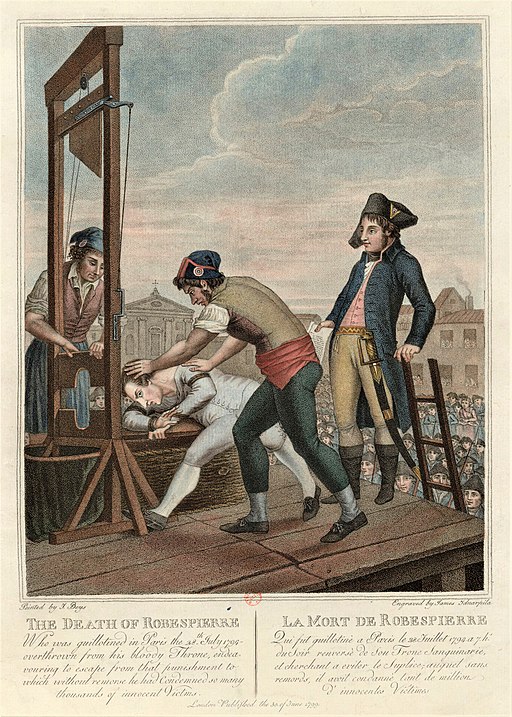
My response to this heartlessness: “How to get to the front of the line when the guillotines are ready.”

Continue reading

It’s Willfully Stupid to Pretend the Shakespeare Authorship Question Is Resolved

More than meets the eye?

In response to the recent publication of Elizabeth Winkler’s lively and thought-provoking Shakespeare Is a Woman and Other Heresies, which is, among other things, a powerful book-length argument for academic freedom in English departments, Slate.com published a review by staff writer Isaac Butler labeling Winkler’s book “Shakespeare Trutherism” and urging a supposedly long-overdue full stop to Shakespearean authorship studies. Or, as the title of Butler’s review grumbles, It Is Long Past Time to Retire the Oldest, Dumbest Debate in Literary History.

The reason the debate may actually be the dumbest is because one side argues the way this title and the review itself argue, pretending there’s nothing to debate. Unfortunately for the intellectually curious, the truly dumb (read, willfully incurious) side comprises the academic gatekeepers. Doubting “the Bard” is a surefire way to avoid hiring or career advancement in traditional English departments and publishing houses. But the authorship of the Shakespeare canon is far from being a settled matter. The deeper scholars outside the academy dig into the question, the shakier the orthodox case inside looks.

Continue reading

The Readiness Is All: ChatGPT and the Future of Authorship

Act I, Scene I

[Enter three pigs, Jolly, Merry, and Happy]

Jolly: Oh, how fair the morn has broken,
And how sweet the dew on the grass.
We three pigs, no words unspoken,
Shall build our houses that shall last.

Merry: But hark! What threat looms o’er us?
The wolf, who seeks to do us harm.
We must build strong, lest he come nigh us,
And bring upon us his foul alarm.

Happy: Fear not, dear brothers, for I shall go,
And build my house of straw and hay.
With haste, I’ll have it done, and lo!
The wolf shall never come our way.

[Enter wolf, snarling and snapping]

Wolf: These pigs, they think themselves so clever,
With their straw and hay, so flimsy, light. 
But I’ll show them, with my cunning, never
Shall they escape my appetite.

–ChatGPT, given the prompt to write The Three Little Pigs in the style of Shakespeare

The other day, after a discussion we were having about the danger the artificially intelligent ChatGPT tool seems to pose for unemployed writers like myself, my wife and I decided to test the robot with a series of prompts to see just how much of a threat it really is.

We weren’t just interested in having a chat with ChatGPT; we wanted to see what ChatGPT could do. What kind of literary stuff was this writing robot made of? After some simple writing exercises, we asked it to write the story of the three little pigs in the style of Shakespeare. You can see some of the result above and the whole mini-play below. Continue reading

I’m Back. And I Think Assange Should Be Freed.

	{{Information |Description={{en|1=Demonstration in front of Sydney Town Hall in support of Julian Assange, 2010, December 10}} |Source={{own}} |Author=Elekhh |Date=2010-12-10 |Permission= |other_versions= }} Category:Julian Assange [[

I wrote my last post for this blog all the way back in May 2017, before Julian Assange was booted out of sanctuary in the Ecuadorean Embassy in London. Since then, he has been convicted of skipping bail, indicted under the US Espionage Act, and begun fighting extradition to the US from his current residence of Belmarsh Prison in the UK.

For the past nearly six years, visitors to this blog might understandably have been led to believe I am not sympathetic to Assange. My last post certainly was not.

But before I turn to other topics, let me disabuse any readers suffering the misimpression that I’m anti-Assange. I have never been in favor of Assange’s being brought to the US to face trial for his part in uncovering the atrocities of the Iraq war. I think WikiLeaks provided a great service in making the world aware of the realities behind that war, and they made several other important contributions toward shedding sunlight on the corruption behind the curtains of world power centers, as well. People need this kind of service to help us see our “leaders” for the imperfect, corruptible weaklings so many of them are.

However, one thing ought to be clear to anyone who has followed Assange’s career since 2011: He’s not so perfect a human himself, but, like the world leaders he has exposed, is all too human. His behavior around the Seth Rich bullshit is just one example of what I view as a self-dramatization fetish that has led Assange to make numerous blunders that have only made his situation worse than it had to be.

But I really don’t want to pile any more crap on the poor guy. His suffering (some of which he brought on himself) has gone on far too long. Biden should pardon him and let him go home to his family, who have also suffered for his sake beyond their fair share.

And now, on to other topics.

Suis-je #CharlieHebdo?

kissing_hebdoMy basic feeling about Charlie Hebdo: The crime was committed by a clique of criminals who self-identify as Muslims and identify this crime as being part of a holy war. But the crime is not holy, it’s murder of people for offending with cartoons, which is about as pathetic an excuse to commit murder as can be imagined. So the murderers deserve to be caught and shown only the mercy inherent in the criminal justice system in France and no more. That should be the scope of the discussions around this crime.

Instead, we are being treated to the spectacle–the same-idiotic-old-shit of a spectacle–of incensed white people, mostly, wanting to spread the blame for this murder away from the murderers and all over Islam and believers in Islam. To me, the idiocy of Islam is another discussion, and this red herring of Islam’s “blame” for this murder is just an excuse for incensed white people to behave badly and give full vent to their worst, most bigoted impulses. It’s all beside the point. It accomplishes nothing but spleen venting. It’s tiresome to have to fight it, but I just can’t stand stupidity from any quarter.

I just wonder, what am *I* missing? I have a knee-jerk need to fight the prevailing idiocy. What makes me so smart that I’m immune to it all, though? What am I missing? I don’t know…

I don’t listen to talking heads. I just want the basic facts, not all the bullshit that always comes with them, all the gas spewing out of idiots’ gas holes on TV about them. Of course I found this story irresistible, like everyone else in the world. I was also curious how Twitter was talking about it, so I saw that #killallMuslims had been trending worldwide. Then I saw what the general feel for the story was on Twitter, and it was basically ultramorons over here wanting to #killallMuslims, Muslims and bleeding hearts over here claiming the killers weren’t “true” Muslims because “Islam is a religion of peace” (with a bunch of both types criticizing CH for “provoking” the attacks), and atheists over here jumping on the Bill Maher/Christopher Hitchens (praise be to his name) bandwagon using this as an excuse to piss all over their favorite most-hated sky pixie worshippers of the moment. All so predictable and beside the point.

It’s not that I have any great love for Islam. It’s that I have low tolerance for snap judgments about the meaning of news events. I mean, what is the justice issue here for me? It’s not that innocent Muslims are being smeared by careless Westerners. It’s that careless Westerners are smearing the discourse with irrelevancies. Maybe I’m wrong. Maybe the Dawkinses and Mahers and Harrises, by pointing  their fingers at Islam are contributing to a global intellectual environment in which ultimately fewer adults will choose Islam as an ideology, which would be a good thing. On the other hand, maybe they’re contributing to a global intellectual environment in which borderline Muslims get knee-jerked back to Islam because Islam’s enemies say it’s bad so it must be good.

#FreeWillies

free-will-99-steps-of-progress-geek-art-series

Last week, in the wake of the People’s Climate March and the #FloodWallStreet protests that followed it, I was tweebating folks of the “voluntarist” persuasion of libertarianism about the alleged hypocrisy (or irony, at least) of environmentalists using the fruits of capitalism to communicate their presumably anti-capitalist ideas. This was something we used to hear a lot in the beginning of the #Occupy movement from Wall Street’s apologist-propagandists in the media and the grandstands they played to. The argument seemed to be, if you use it, you can’t complain about it. Interesting to me, those who take this argument seriously (and assuming anyone really does, it must be these people), they don’t seem able to see that they could be accused of a similar hypocrisy for criticizing the government when they benefit from government infrastructure, public safety and defense.

But that is not my problem with the voluntarists. My problem is with their fundamental stance, which was exemplified for me in a tweet from one “Jack”:

Jack ‏@oaaselect Sep 23

Did you get tricked into buying your device [meaning what I was using to Tweet with] or did you buy it voluntarily? @ChristofPierson @scooterpie61

via Twitter / Notifications.

On its face, this seems like a good question. The problem is, if you dig just a little under the face, the question falls apart. Do we really buy things “voluntarily”–of our own free will? Is it as simple as that? Consider the millions of people who broke records dumping their current phones for the iPhone 6 recently. Did all of those people need a new phone? Did they need the iPhone 6 in particular? Considering they were surviving fine without it until it went on sale, It’s hard to believe they did.. But the question is not did they need it, but did they want it? Did they buy it of their own free will?

Philosophically, free will is still controversial, of course. It’s a popular belief for obvious reasons, but the jury is still out on whether or not it’s fact. The very unpopular determinist position is that we are restricted to a very limited range of behaviors, based on any given stimulus, and the range shrinks the more habituated to these stimuli we become–unless we are insane, in which case, our behaviors can be frighteningly free-ranging and considered dangerous to society. Of course, just because this is an unpopular (because unflattering) point of view doesn’t mean it’s wrong.

I think it’s prudent to wonder, then, if the millions who ran out to buy the iPhone 6 all really “wanted” the phone or were responding as expected to a stimulus (“new Apple product,” or just,” latest gadget”) they’ve become habituated to reacting to in a specific way. There is no easy way of knowing, except maybe by comparing one’s own responses to these kinds of stimuli. Do we always buy what we want? Do we always take the job, or marry the spouse, or buy the house or car or gadget we want?  If I were a voluntarist–I mean, if voluntarism were something I thought I wanted to believe in–wouldn’t it be important to know if free will were something more than a wish or hope–in other words, a self-flattering illusion? Wouldn’t it be important to know if it were something more like an objective fact?

If it is more like fact, it certainly is not a simple one. But my conversation with these voluntarists was unsatisfying not just because of Twitter’s limitations as a forum for complex discussion. These voluntarists were not interested in complexities in the least. They were quite content with their received opinions about free will, the nature of “real capitalism’ (which according to them is something, unironically to them,  not of this world), or the right (or justice, if you will) of those who critique capitalism partaking in the gadgets the system produces. I have to wonder, who’s less liberated: the person within a system who sees its faults and says what those faults are, or the person whose ideology doesn’t permit more than a shallow understanding of the very thing they think they believe in.

Gary Wills: GOP Tactics Echo Antebellum South’s Secessionism

Gary Wills has a very enlightening new piece in the New York Review of Books about the debt-ceiling/shutdown crisis manufactured by the Tea Party wing of the GOP. I can’t add anything to it, Please just go and read it. It’s an opinion of the American present deeply informed by the American past.

Here’s a taste:

Republican leaders in Congress are too cowardly to say that the voting restrictions being enacted by Republican-controlled state legislatures are racially motivated. They accept the blatant lie that they are aimed only at non-existent “fraud.” They will not crack the open code by which their partners claim to object to Obama because he is a “foreign-born Muslim” when they really mean “a black man.” They will not admit that the many procedural laws adopted to prevent abortion are in violation of the law as defined by the Supreme Court. They go along with the pretence that all the new rules are “for women’s health.” De facto acts of secession are given a pseudo-legal cover.

Thus we get people who say they do not want the government in control of women’s health under Obamacare—just after they order doctors to give women vaginal probes the doctors do not consider medically necessary. Or that they do not want the government telling Americans what they should do about their health—just before they prohibit “navigators” from even discussing choices about their health. The same people who oppose background checks for gun purchases now want background checks for anyone the government authorizes to explain the law to people. This is a gag rule to rank with antebellum bans on the discussion of slavery.

So we have one condition that resembles the pre-Civil War virtual secessionism—the holding of a whole party hostage to its most extreme members. We also have the other antebellum condition—the disproportionate representation of the extreme faction. In state after state in the 2012 election, there was a large vote for President Obama, but a majority of House seats went to Republicans. In Pennsylvania, for instance, Obama won 52 percent of the votes cast, but Republicans got over twice as many seats (13 to 5), thanks to carefully planned gerrymandering of districts by Republican state legislatures. This advantage will be set in stone if all the voter restriction laws now being advanced block voters who might upset the disproportion.

The presiding spirit of this neo-secessionism is a resistance to majority rule.

(My only comment on all this I said a little over two years ago,)