The occupation of Iraq in our name is over, officially. Here’s what “we” achieved:
Dr. Dahlia Wasfi
Socialism 2007 conference
Chicago, June 16, 2007
http://www.socialistworker.org
Filmed by Paul Hubbard
The occupation of Iraq in our name is over, officially. Here’s what “we” achieved:
Dr. Dahlia Wasfi
Socialism 2007 conference
Chicago, June 16, 2007
http://www.socialistworker.org
Filmed by Paul Hubbard
Before the changeover to DU3, which I wrote about in my last post, Democratic Underground’s rules for posting in its forums were last modified in August of this year, about a month before the #OWS movement was front-page news. “Failure to abide by these rules,” the introduction to them warned, “may result in your post being removed, your thread locked, or your posting privileges revoked without warning.” A sampling demonstrates the administration’s bare tolerance for politics left of the Democratic center:
- This is a website for Democrats and other progressives [sic].
- Do not personally attack any individual DU member in any way. Do not post broad-brush attacks, rude nicknames, or crude insults toward a group of DU members.
…
- Do not post support for non-viable or third-party spoiler candidates in any general election.
- Do not post disrespectful nicknames, crude insults, or right-wing smears against Democrats.
On the face of it, the second bullet point, adapted from many previous iterations, looks like a fair (and balanced) warning to both sides of the primary wars of 2008–team Obama and team HRC–not to attack each other. Not being inside the administrators’ heads, I won’t presume that they didn’t intend it to be taken that way. The effect, however, was that by the time those revised rules were posted, most of team HRC had long before either been driven underground or “tombstoned”–as a ban from DU was called because of the image of a tombstone (with the epitaph “Here lies a disruptor. He disrupted badly.”) that replaced the offender’s avatar on their member profile page. But those primary wars had continued by proxy, it seemed to me, in battles with moderators and more and more with a stable of Obama faithfuls who were quick to gang up on anyone who made the slightest criticism of the president’s performance. Continue reading
In case you had any doubt that those are not people but programmed robots delivering you your local news:
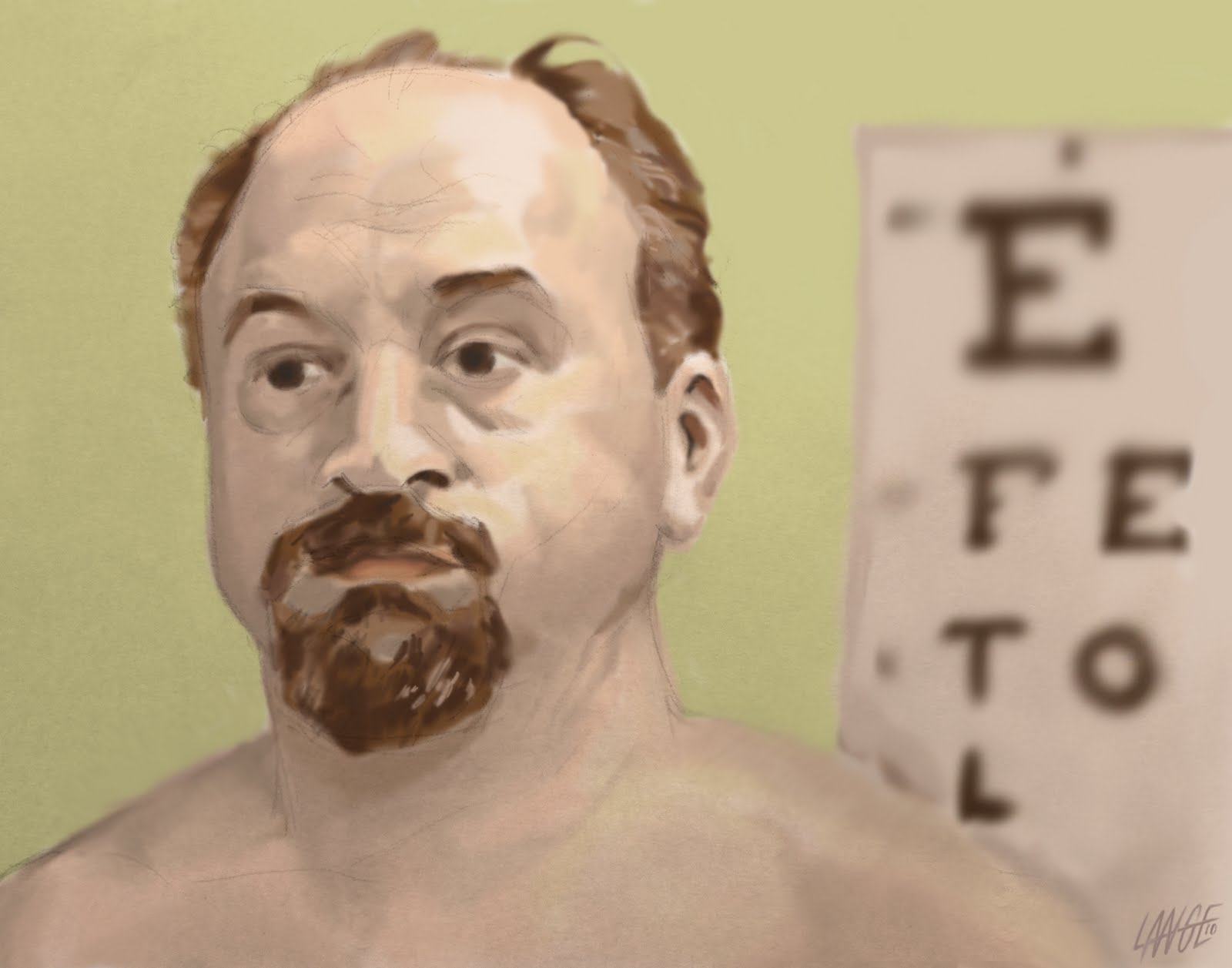 Louis CK, the comedian and star of the FX comedy series Louis (which, I confess, I haven’t gotten around to actually ever seeing), just conducted an amazing, radical experiment in do-it-yourself capitalism that has paid off beautifully for him. Continue reading
Since I began this series, Democraticunderground.com has undergone a major change, dropping its 2.0 version–which was launched in July 2003, two and a half years after the initial launch of the site and just three months after I became active in the community–and unveiling its 3.0 version. It’s difficult for an outsider to get a bead on why this change was deemed necessary. One plausible-enough scenario I saw some long-time DUers posit is that the software the old site was built on (DCForum+ Version 1.1) is no longer supported by the the original developers who stopped making it in 2002, so all of its fixes for bugs (and there were many) had to be jury-rigged by the site’s administrators. But many DUers, both banned and active, think the software issues are an excuse for the real reason for the change, which is to stifle dissent from DU’s inherently center-right, pro-Obama, pro-Democratic Leadership Council bias.
More than a few believe greed may be a factor, as well.
 I’m reading a book that is so good, so well-written, so relevant to the zeitgeist, that I can confidently recommend it to anyone who reads, though I’m just a bit more than halfway through it myself: Debt: The First 5,000 Years by David Graeber.
Before I tell you why you should go now and buy, borrow or reserve this book and get reading, I’ll call your attention to an interview Graeber gave the British magazine The White Room which gives an interesting peek into his background and main political ideas. Graeber, a well-respected anthropologist, is becoming better known as one of the influencing thinkers behind #occupyWallStreet. A couple of sentences from the introduction of the White Room interview beautifully make a point about OWS that I less successfully try to make when people criticize its “fuzziness” and lack of demands:
…Graeber has put the spotlight on the anarchist principles of the Occupy movement, explaining that the lack of concrete demands is part of a pre-figurative politics. The protestors act as though they are ‘already living in a free society’, and thus refuse to accept the legitimacy of existing political institutions and legal order – both of which, he says, are immediately recognised in the placing of demands. Continue reading

Once again, forward-thinking journalist Naomi Klein is steps ahead of the pack. In an interview with Klein on his Dot.Earth blog, the New York Times’s Andrew Revkin summarizes the conclusion Klein reached in a recent Nation article while attending the libertarian Heartland Conference of climate change deniers in Washington last summer: “[P]assionate corporate and conservative foes of curbs on greenhouse gases are right in asserting that a meaningful response to global warming would be a fatal blow to free markets and capitalism.” Here’s a taste of the interview:
There is no question that robust public infrastructure is key to both reducing emissions and preparing for the heavy weather that we cannot avoid. Yet for the right-wing think tanks that sponsor the Heartland conferences (not to mention the modern-day Republican party), this is ideological heresy. Their whole reason for being is to shrink the public sphere in the name of low taxes and the benefits of privatization. What I’m arguing is that the idea that we can win the climate fight without engaging in ideological battle over these core questions about the role of government has always been a fantasy. Trying to dodge this fight is a big part of why we lose, and we need to get over it. It’s no coincidence that the countries with the most enlightened climate policies are also, overwhelmingly, the most social democratic.
And by the way, it’s not just that most of the big green groups avoid the growth question (with notable exceptions, as you point out). It’s that the solutions that groups like EDF (Environmental Defense Fund) have pushed are very often consumption based: buy these light bulbs, drive a hybrid, etc… And often these changes make sense. But the not-so subtle impact of putting so much emphasis on individual shopping habits has been to reinforce both consumerism and individualism. Tom Crompton and Tim Kasser have written some wonderful stuff on this. In this report, for example, Crompton argues that environmentalists need to do more to challenge the individualistic worldview in their campaign work.
This is particularly salient in light of the social science I reference in my article, particularly the research coming out of Yale’s Cultural Cognition Project, which has found that the major determinant of whether a person rejects the scientific consensus on climate change is whether they have a strongly “hierarchical” or “individualistic” worldview. One set of stats that didn’t make it into my piece: 78 per cent of subjects who display an “egalitarian” and “communitarian” worldview believe that most scientists agree climate change is happening (which is true) – compared with only 19 per cent of those with a “hierarchical” and “individualist” worldview.
For me, it follows from this that part of being an effective environmentalist is trying to win more people over to a worldview in line with the laws of physics and chemistry, rather than offering shopping advice and touting “market-based solutions.” Put another way: if we know that aggressive regulation and rebuilding the public sphere through collective action are integral to meeting this challenge, then we have a responsibility to say so, and to defend the worldview behind those policies.
I’ll return to this idea of the urgent need to change the manner and tone of the discussion when I return to my history of the fracturing Democratic grassroots (read the first and second parts here) in upcoming posts.

The right's use of sex to take down Bill Clinton roused some of those most disappointed in his presidency to his defense in the internet trenches.
When Democratic Underground was first formed (for background, see Part 1 of this series here), it was an ideal refuge for Gore voters from the indifference of the news media and the outright hostility of Bush voters in non- or bipartisan forums, such as Usenet‘s political groups (alt.politics, talk.politics.misc, my own hangout during the late Clinton years alt.current-events.clinton.whitewater, etc.) . I was attracted by the subtle aptness of the new site’s name. It did, indeed, seem as though Democrats who believed Bush had been illegitimately installed as “president” had been driven out of the public discourse. We felt, without too much exaggeration, like a resistance army gearing for rebellion against a tyrannical regime.
DU became well known in certain circles for its weekly contribution to the national discussion, Top Ten Conservative Idiots, a satirical summary of ten of the previous week’s most stomach-churning (from a liberal point of view) acts or statements from right-wingers in politics and the media. Bush, Cheney, Ann Coulter and Rush Limbaugh usually topped the list, which was often linked to on other boards around the net. Other DU staples were the Hate Mailbag, featuring actual letters from the enemy with all their misspellings and SHOUTING IN CAPITALS left intact; Questions for Auntie Pinko (I remember the name better than the content); and satirical ragings from an invented right-winger named Bob Boudelang. The front page often also carried an essay by someone on staff or a contributor. I had a couple of essays published there (including one just after 9/11) before I became a regular on its forums.
But DU wasn’t the only game on the left side of cybertown. It was just one of a thriving subculture of dissident websites that had actually grown up around reaction to the successful right-wing grassroots campaign to impeach Bill Clinton at the dawn of the world wide web. The left watched in mixed horror and admiration for the way their counterparts on the right used the fledgling internet to spread like wildfire every smear that had ever been formulated about the Clintons (many of which, it’s true, came from the hot medium of talk radio) to build a groundswell in the Republican party for getting rid of the Clintons by any means necessary. Truth didn’t matter, just effectiveness as a meme, to use a word that was just acquiring its imprecise shade of meaning as a viral idea that can literally be copied, cut, pasted and clicked on to move from one contaminated mind to the next. It was a sickening spectacle and a clear, disturbing sign of where the Republican base was moving in the post-Reagan era. It wasn’t toward reason or, least of all, reasonableness. Continue reading

A couple of days ago, I accidentally stumbled upon a fascinating American subculture I was not well aquainted with: the prickly, stranger-shy cluster of rightist (though many self-identify as “liberal”) Hillary Clinton voters who were so enraged by the alleged (not to imply falsely alleged) chicanery between Team Obama and the DNC during the 2008 Democratic primaries that they picked up stakes and headed for any hill they felt sure Obama or the Democrats hadn’t defiled with their presence.
In my ramblings on the internet over the last few years, I have encountered many a Clinton supporter of the left who was driven to internet purgatories where other disaffected or disaffiliated Democrats gathered to share solace and critiques of Obama’s America with lefties (Greens, Naderites, Marxists) who had given up on the Democrats as the best hope for progressives long, long ago. Indeed, I’ve lately felt much more comfortable with the left-wing victims of Obama’s serial betrayals than with Obama supporters, one of which I nominally was in 2008. But this was my first encounter with the radicalized centrists and center-rightists in the Clinton contingent who felt the sting of the Party’s betrayal.
Let me tell you: radical centrism is a trip! I’m sure my new friends in this subculture would find such an amused anthropological assessment of them annoying. To them I can only say, I’m sorry. I can’t help it. You’d be laughing at yourselves too if you could only see yourselves through my eyes. But I’m going to try to set aside my amusement with them, which owes mainly to their strangely and almost uniformly vicious defenses against anyone not in their club–e.g., me, in my clumsy attempts to learn more about them–and try to focus on my observations about what this group tells us–tells me, anyway–about the Democrats’ prospects in 2012 and beyond. My main interest is in how the party’s recent past and future connect with the rise of #OccupyWallStreet. My hypothesis: The story of grass roots Democrats in the 21st century is one of numerous parallel threads of ordinary Americans’ political desires being thwarted by indifferent or even hostile political institutions, and this may be the beginnings of a new American Revolution. Continue reading

Here’s an interesting nugget in a comment, addressed to me, from the post on John W. Smart’s blog that I was discussing yesterday:
…Hillary lost because of documented, widespread caucus fraud, bribing of superdelegates, and the theft of her delegates on national TV (which I and many others watched live). She won the primaries, but they pulled him an inch over the finish line through the cheating. So our disgruntlement is about far more than Hillary. For many (most?) of us, the democrats were “the good guys”. What you obamabots did was to awaken us from our stupor, you allowed us to see how corrupt the obamacrat party really is. So for many of us our whole political philosophies have changed. We no longer trust the dems more than we trust the republicans, and we know now that there are a HELL of a lot of stupid and mob-like people out there who don’t have a CLUE what real democracy means. To them, it’s win at any cost. So your obot tactics burned a LOT of bridges. It may have been just one more day of cheating for you guys, but it was a life changing tsunami for everyone else. Many have changed to independent, some are still registered as Democrat but no longer consider themselves as such. So any numbers you think you have – you DON’T.
I’m not going to answer this person on Smart’s blog as I know my presence there this morning would be counterproductive to the purposes of dialog. He or she said some other things that are unhelpfully provocative boilerplate from the primary wars of 2008, and as everything that could possibly be said in those wars has already been said a thousand times over, there’s really nothing more anyone can add to it that isn’t also boilerplate or counterproductive to reasonable discussion. I’m really, really not interested in the “Who’s better/more progressive/more electable/ more presidential: Hillary or Barack?” debate. From my perspective, this is irrelevant to present realities, no matter how endlessly fascinating the question may be for some. It honestly never was a useful discussion for any leftist, ever, even while it was was relevant.
But it is eye-opening to experience the violence of feeling ready to erupt among the Clinton refugees and, I tip my hat to them, sincerely: it does make me realize that I, like probably every former Obama supporter, no matter how hot or cold they were for their choice, had blinders on during those primaries. Continue reading
 Tragic Farce